

We hear about the broken hocks, missing toes and tripaws. But what about muscular injuries? More common even than fractures on the racetrack, but largely invisible once healed, muscular injuries can affect your greyhound's life in ways you might not be aware of.
I have a ex-racing greyhound myself and I know how stoic and unbothered they often seem. How do we know if they are in pain or not?
Injuries and why they happen
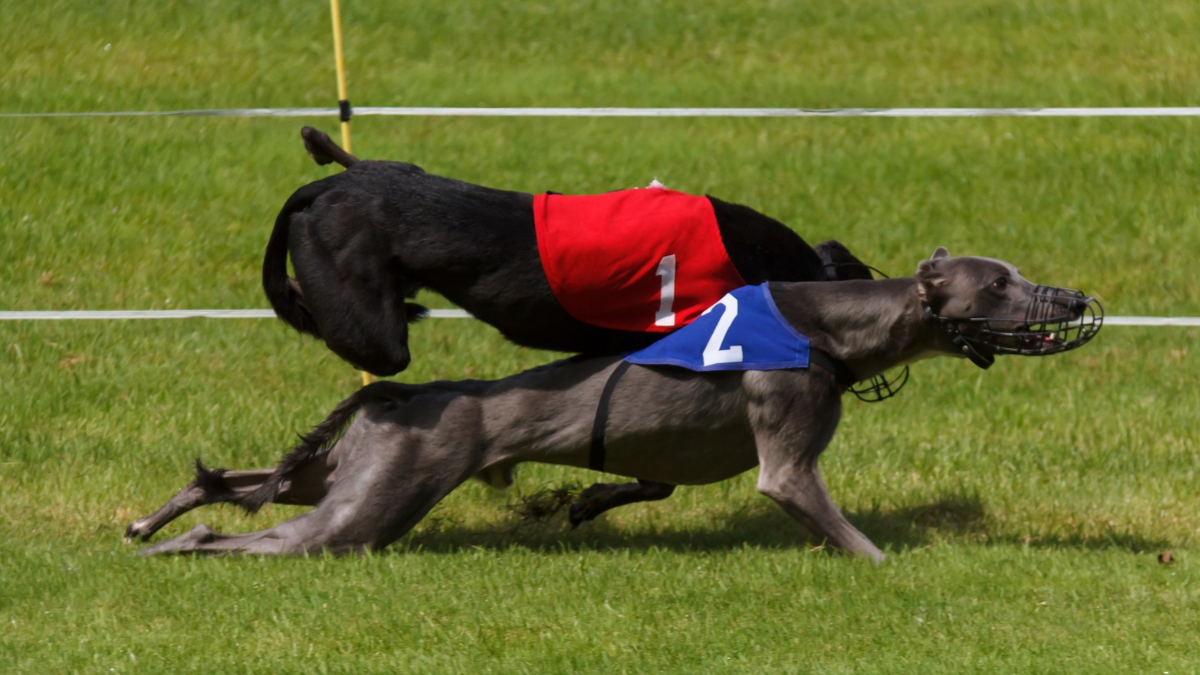
Most greyhounds race in an anti-clockwise direction, and going round the bend puts extra strain on certain limbs. The left foreleg acts as a pivot, while the right hind gives the propulsion, so injuries are more likely in these legs.
Fractures can happen as a result of collisions on the track, whether that's with other dogs, the rails or the track itself. Stress fractures can also build up over time, when the excessive forces going through the leg bones upset the way the bones remodel (the continuous process of bone renewing itself). They most commonly happen in the lower leg joints – the hocks, wrists and toes – where lots of little bones make up the joints. Sometimes these fractures lead to amputations, and toe amputations are common on the hind paws.
Tripaws and overcompensation
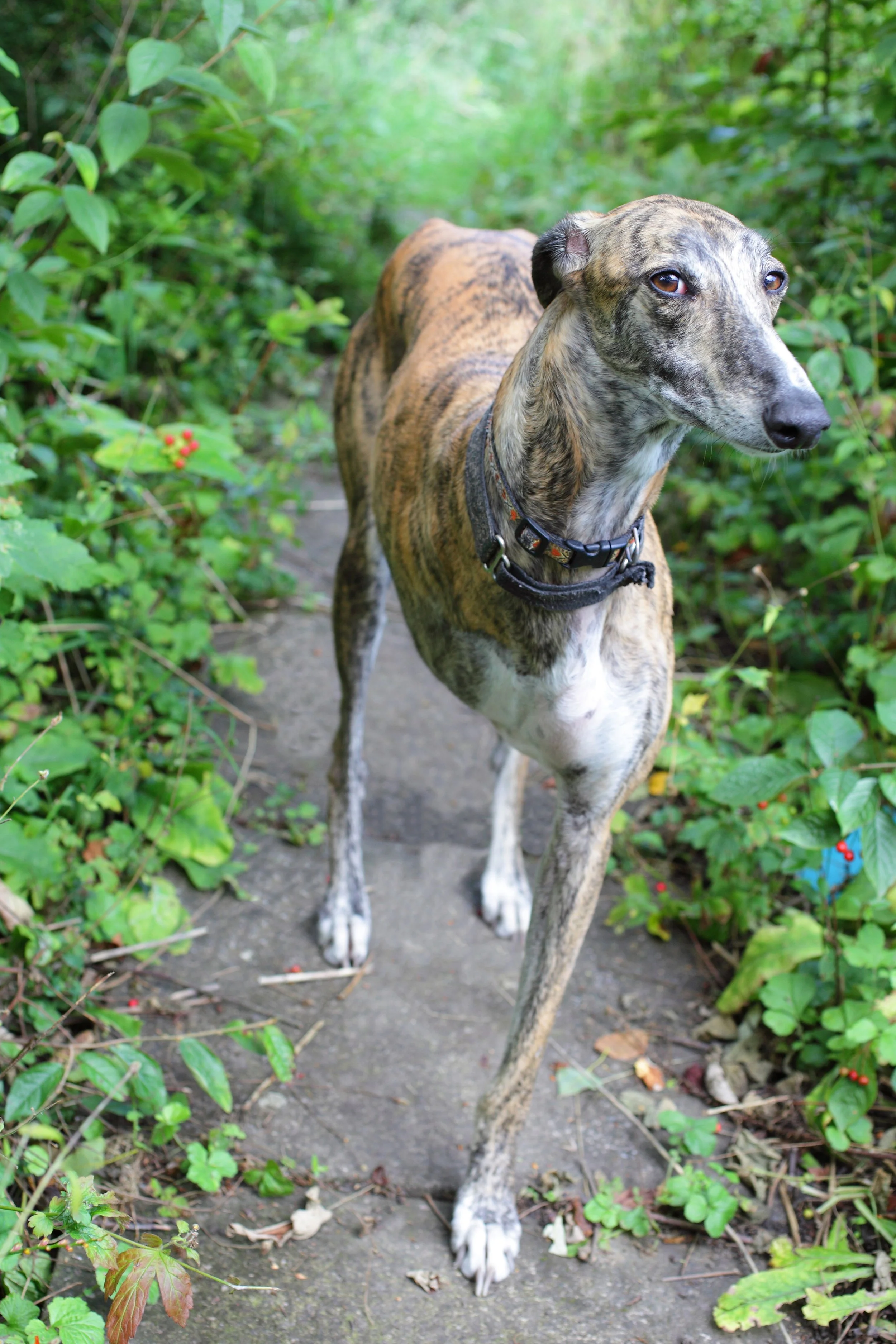
The amputation of a whole leg is less common, but it has a significant impact on the rest of the body. Many tripaws appear to adjust well, running around, hopping up on the sofa and managing daily life with small adaptations. But the rest of the body has to compensate.
If the right hind leg has been removed, for instance, the left hind leg is now doing all the weight bearing and all the propulsion at the back. The front legs are recruited to help out too, so your greyhound is taking more weight through them than normal. This all increases wear and tear on the joints
in the remaining legs, and the lower back, shoulders and neck take the strain too.
This is called overcompensation, and it doesn't only happen after an amputation. It happens with muscle injuries too, and those are even more common on the track than fractures.
Muscular injuries
We're talking about muscle strain, which is the tearing of muscle fibres through overstretching or overuse. This can be a tear to just a few muscle fibres, right through to complete rupture of the muscle and even the muscle being torn away from the bone.
Muscle injuries do heal, but the scar tissue that knits the muscle fibres back together isn't as elastic and flexible as the original tissue, so the muscle is permanently restricted in some way. Muscular injuries are acutely painful, and addressing the pain can be complicated as it can be referred to other areas of the body.
Common muscle injuries
Muscle makes up around 55% of a greyhound’s body weight (in contrast to other breed, where muscle is around 45% of their body weight).
Some muscles are injured more often than others on the track:
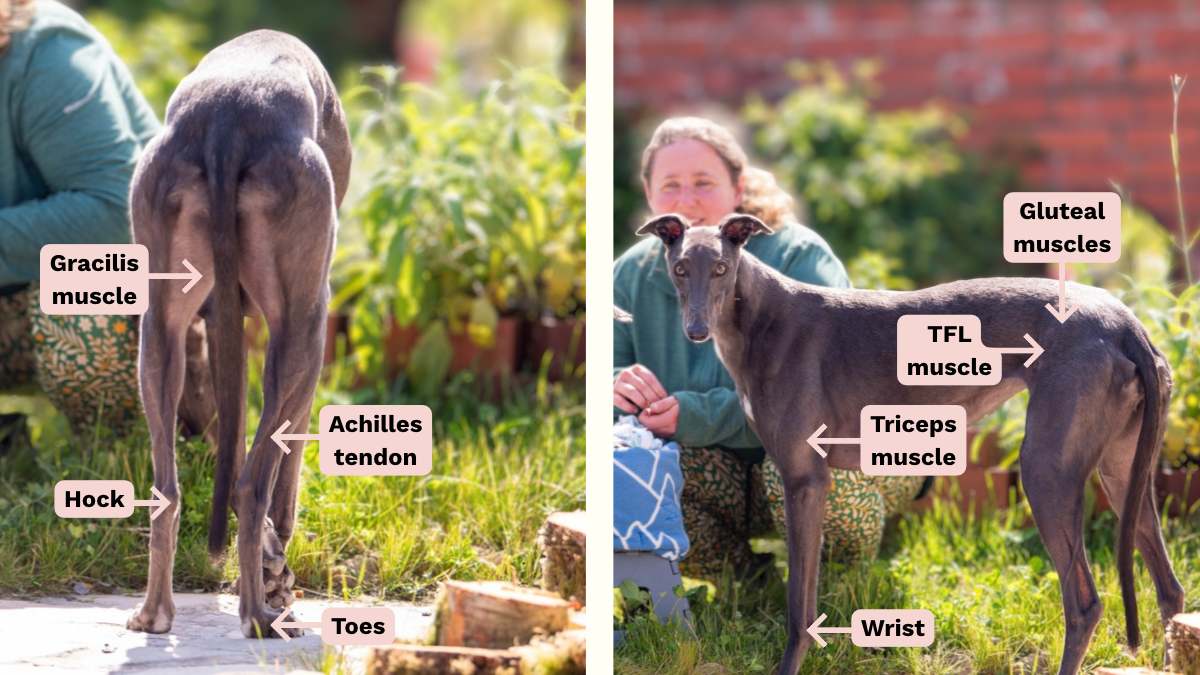
Gracilis – the inner thigh muscle in the back leg, especially the right. This is one of the main accelerator msucles, giving your greyhound that explosive speed.
Triceps – behind the shoulder blade. It takes huge amounts of force especially when cornering on the track.
Hip and thigh muscles – such as the glutes and the tensor fascia lata (TFL) at the front of the thigh
If your rescue told you about any of these, your greyhound may still be carrying the scar tissue, even if the injury happened years ago.
And just like with a tripaw, the rest of the body compensates. Muscles don't work on their own, in isolation - they work in groups to move the skeleton. Say your dog has a sore back leg. They'll start putting less weight through it, and that weight shifts onto the other legs. Over time, the shoulders, neck and back can become tight and sore from doing more than their share.
That's why I look at the whole dog, not just the sore spot. Where a problem shows up now isn't always where it started.
Dyfi's story
My own ex-racer, Dyfi (that’s her in the diagram above), was raced on a skeletal deformity, and now she has scar tissue from muscle strains throughout her lower back and hind legs. Her ability to extend her hind legs out behind her when she's running is restricted, but somehow she's adapted and she still runs extremely fast. However, all that scar tissue means her muscles are stiffer and more likely to be re-injured.
The dysfunction in her hind legs means she carries more weight through her front legs, so she holds more tension in the muscles around her shoulders and front legs. Before she was on painkillers, she would get grumpy in the evenings, snapping at her brother Brenin when he came near her bed. I could hear her left hind paw scuffing the carpet as she walked through the house, and she clearly struggled to hold herself steady when she pooped. When a physiotherapist measured the muscle mass in her hind legs, her left was a centimetre and a half smaller than her right.
I know greyhounds often struggle with stairs, but I don't think her tight muscles helped. She's figured them out now, but I had to teach her hind legs the motions by placing each paw on each stair.
upporting your ex-racer in their forever home
So, even if your ex-racer didn't come to you with a history of fractures or amputations, it's highly likely they're carrying some unseen muscular injuries.
Spotting signs of pain
Greyhounds are good at being stoic, so some of the more common signs of pain may not be so obvious in them.
A greyhound racing with friends in the park or chasing a squirrel (or worse, a cat) isn't necessarily pain-free. The adrenaline of chasing and playing can mask pain, and of course, our greyhounds aren't thinking ahead to the pain that comes afterwards.
First of all, let me say: if your greyhound is limping, they are almost certainly in pain. Get them to the vet so they can be checked over and given pain relief.
In the Canine Massage Guild, we use a tool called the 5 Principles of Pain to help us recognise the signs that a dog is struggling. It covers five areas: gait (how your dog moves), posture (how they hold themselves), activities of daily living, behaviour, and performance. Here are some of the signs I see most often in greyhounds:
Scuffing a paw on the floor as they walk
Struggling with stairs or getting in the car
Stiffness getting up from rest
Slipping on vinyl or tiled floors
Difficulty holding a poop stoop
Grumpiness, especially around their bed or in the evenings
Fatiguing early after running, or leg tremors after exercise
Pain-related behaviour often gets labelled as "naughty", "grumpy" or "anxious", but the root cause may be discomfort. Even subtle changes can signal something's off.
I've put all the signs into a printable checklist you can keep on the fridge and tick off as you notice them. Click here to request your download.
Around the home
Rugs and runners on tiled or laminate floors. Unlike us, dogs walk on their toes rather than the flat (plantar) part of their foot, which gives them less surface area to grip the floor. Imagine trying to walk down the road on an icy day - your muscles hold some extra tension just to stay upright. It's like that for our dogs on tiled or laminate floors, all day. Increased muscle tension leads to pain and restricted circulation, and slowly erodes muscle function. If you don't have carpets, rugs or runners in high-traffic areas - anywhere they play, around their eating area, and in doorways and entrances - will go a long way to reducing that tension.
Raised food and water bowls. Greyhounds have such long legs that they often find it uncomfortable to reach all the way down to the floor to eat and drink. My Saluki boy, Brenin, always waits for me to lift up the water bowl at the secure field, because drinking from the ground is uncomfortable for him. Raising bowls is another way to reduce muscle and joint wear and tear.
Enough room to stretch out fully when sleeping. If you're a greyhound owner, you've probably already conceded your sofa and your bed, so you may not need to change anything! But this is why it matters. Sleeping in a cramped position, such as in a hard curved bed or a crate that's too small, can set muscle fibres and fascia into a shortened position and increase stiffness when they get up. Stiff muscles are more likely to get injured. Of course, greyhounds like to curl into a small croissant shape too, and that's fine, as long as they also have the option of a bed with more room. It's also important they're warm enough, as a warm greyhound is more likely to stretch out instead of staying curled in a tight ball.
Keep them at a healthy weight. Many ex-racers put weight on after retirement, once they're no longer in racing condition. Every extra kilo is more load on muscles and joints that may already be compromised by old injuries.
Out and about
On-lead warm-ups before off-lead zoomies. Greyhounds have incredible acceleration from a standing start. But taking off suddenly on muscles that haven't been warmed up first increases the risk of injury. Five to ten minutes of walking and trotting on lead before letting them off to vanish to the other side of the secure field will help to reduce that risk. And we all know greyhounds are thin-skinned and need a coat in winter - keeping them warm helps with muscle health too.
Help in and out of the car. Jumping out of a high car boot jars the front legs and shoulders every time. A ramp, or a hand on their harness to support their descent, takes that strain off - especially for a greyhound already carrying more weight through their front end.
Monitor after intensive exercise. Greyhounds love to run. It's one of their breed needs. But it's a fine balance between meeting that need and letting them overdo it. Watch for signs of pain and discomfort after exercise, and adjust what they do if you have any concerns.
Pain management
Painkillers
This is something you'll need to talk to your vet about, but if you suspect your greyhound is in pain, a pain trial is a good place to start. This is where the vet prescribes painkillers for a period of time and you monitor to see if they improve. It can take up to six weeks before you see a difference, so be patient. Different painkillers do different jobs, so if nothing has changed after six weeks, it's worth asking your vet to try a different medication.
I know painkillers have side effects, and some owners worry about long-term health problems, which is a totally valid concern. Personally, I prefer to do everything I can now to manage my dog's pain and improve their quality of life, because they live in the present. I'd rather they have a comfortable but shorter life on pain meds than a longer but pain-filled life without them.
Massage therapy
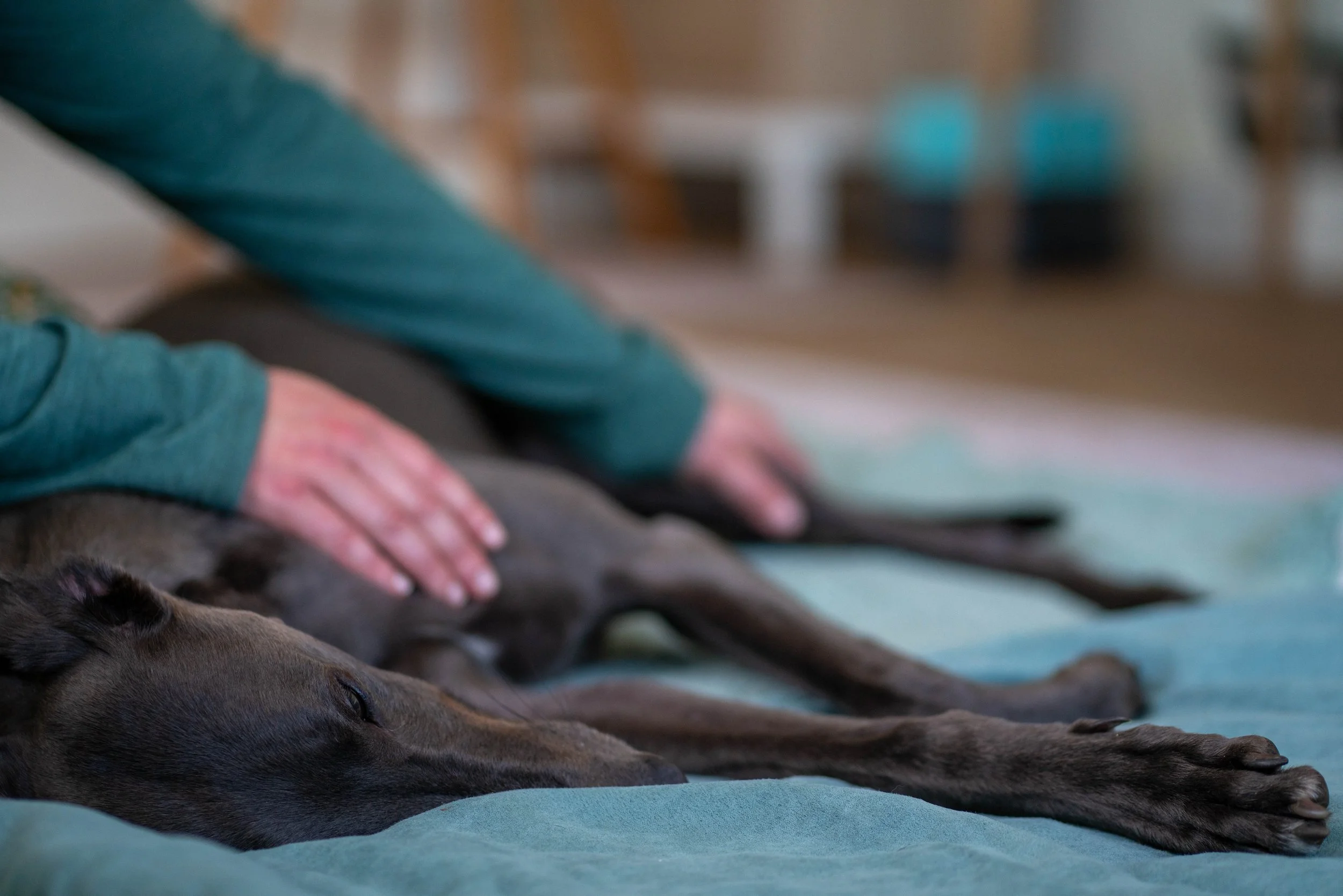
Many greyhounds are very tactile and enjoy touch, which makes them well suited to massage. And massage works directly on the problems we've talked about in this post.
Stiff scar tissue. Massage can help improve the flexibility of the tissues around old injuries, so muscles can move more freely.
Overcompensation. Muscles that have been working overtime to make up for an old injury build up tension and knots (trigger points). Massage eases that tension and helps restore blood flow to tired muscles.
Referred pain. Because pain from a muscle injury can show up elsewhere in the body, I look at the whole dog, not just the sore spot.
Mobility. Easing tight muscles improves range of motion, helping your greyhound move more evenly and comfortably.
Muscle strength. Massage helps to build and maintain muscle strength, and supports recovery after injury or surgery.
The evidence
A 2021 study published in Vet Record, the British Veterinary Association's journal, looked at 527 dogs treated by Canine Massage Guild practitioners. After treatment, there were significant reductions in pain across gait, posture, daily activities and behaviour, and 95.5% of the dogs were judged to have responded. It wasn't a controlled trial, but it's a good indication of what massage can do.
How Dyfi is now
Dyfi's pain is managed with a combination of painkillers from her vet, regular massage from me, and monthly hydrotherapy with a vet physio. Each one does a different job, and together they've made a big difference. The muscle in her hind legs has balanced up, she doesn't scuff her paw so much, she's no longer grumpy in the evenings, and she has more energy.
That's why I like working alongside vets, physios and hydrotherapists. Every greyhound is different, though, and you don't need to do everything Dyfi has. I'll always be honest about what's likely to help yours.
Even the most relaxed sofa-loving greyhound may be living with old muscle injuries, and the signs can be easy to miss. Small changes at home, a pain trial with your vet, and therapies like massage can all make a real difference to how comfortable they feel.
Of course, I’m biased, but I love working with greyhounds, so if you've noticed any of these signs of pain, let's chat about how I could help make life easier for you and your greyhound.