Information for Vets
Dogs are masters at hiding pain - especially in a clinical setting. A clinical canine massage therapist can help pinpoint what might be hiding, and help rehabilitate.
An owner's description of their dog's discomfort can often sound vague or difficult to quantify.
Muscular and myofascial issues can present across a wide range of conditions and situations, including cases where imaging and diagnostic tests have not identified a clear cause.
Which of your patients could benefit?
Clinical canine massage can help with the following conditions:
Soft tissue or muscular injury rehabilitation
Pain management for arthritis, hip or elbow dysplasia, luxating patella
Chronic pain, stiffness or lameness
Post-operative support (e.g. TPLO)
Dogs on crate rest or conservative management programmes
Gait or postural changes
Fasciculations or exaggerated panniculus reflex
Inconclusive X-rays or MRI scans
NSAID contraindication or intolerance
Mobility support for neurological conditions
Subclinical signs of pain
Senior dogs showing early signs of ageing
Reluctance to jump, climb stairs, or settle
Unwillingness to be petted, groomed, or examined
Anxiety or behaviour changes due to pain
Sporting or working dogs with performance issues
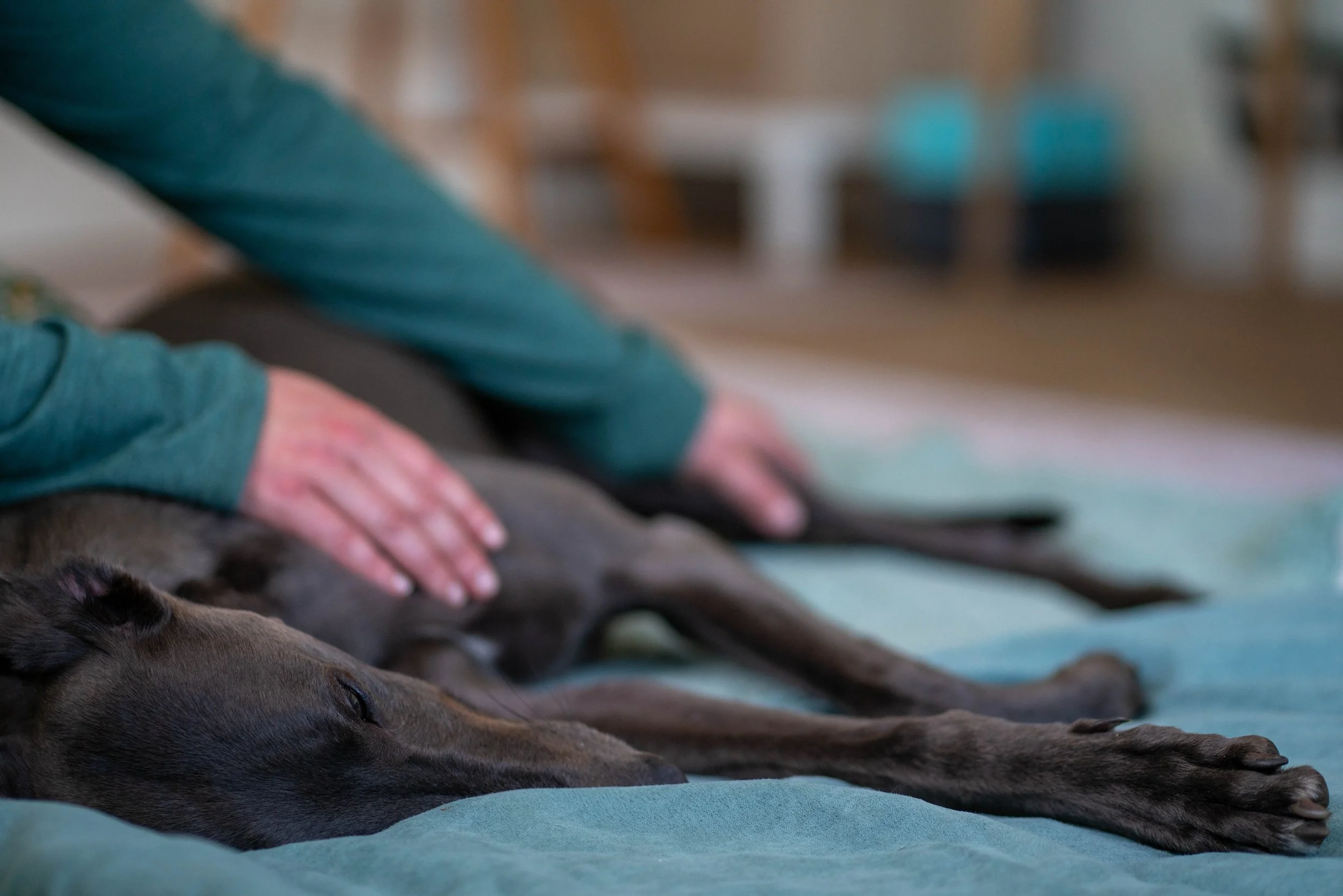
I am a member of the Canine Massage Guild and trained for two years on the Clinical Canine Massage Practitioner Programme, externally accredited by LANTRA via the Canine Massage Therapy Centre (Level 4 Diploma)
I specialise in Myofascial Release, Remedial Sports Massage, Deep Tissue Massage, Swedish Massage, and the Lenton Method® of Neuromyofascial Release
My professional membership, training and credentials can be checked via the Canine Massage Guild's therapist register
I commit to a minimum of 25 hours' CPD every year, as part of the Canine Massage Guild's code of ethics and conduct
I hold professional indemnity and public liability insurance, audited annually by the Canine Massage Guild
I never treat a dog without veterinary consent, in line with the Veterinary Surgeons Act 1966 and Exemptions Order 2015
I provide a written report back to the surgery on completion of a client's initial sessions, to support continuity of care
I comply with GDPR and data protection requirements
About me
The evidence base
There is a growing evidence base for clinical canine massage.
A 2021 peer-reviewed study published in the Veterinary Record found statistically significant reductions across all five pain indicators in a sample of 527 dogs, with 95% judged to have responded positively.
This trial was the first of its kind, conducted by the Canine Massage Guild, in conjunction with Winchester University and University Centre Sparsholt, and investigated the efficacy of clinical canine massage therapy and specifically the Lenton Method®.
How massage can help
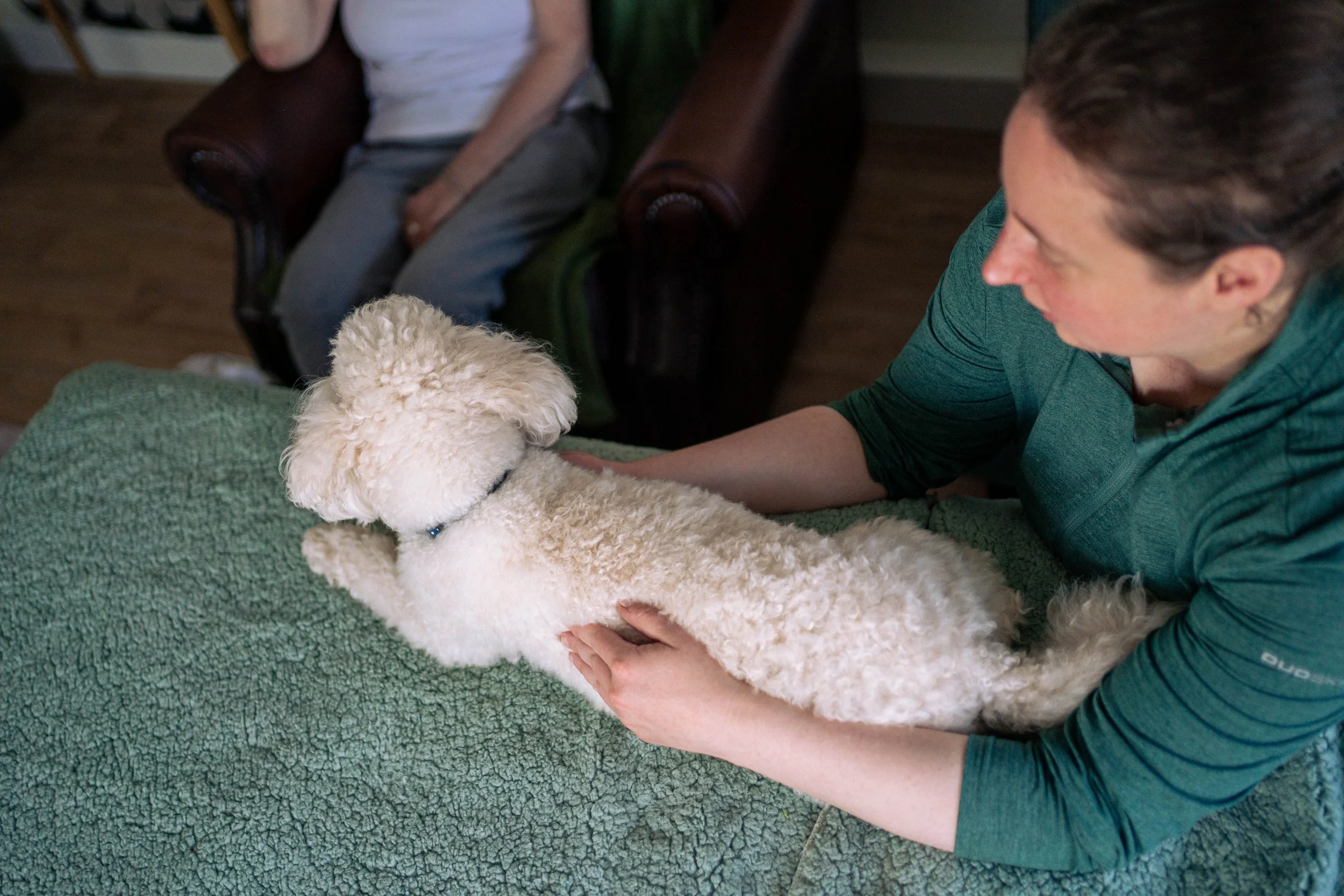
Clinical canine massage draws on an integrative blend of techniques - neuromyofascial release (including the Lenton Method®), remedial sports massage, deep tissue and Swedish massage - tailored to each dog's presentation. The aim is to normalise the fascial environment, address muscular splinting, and break the pain-spasm-pain cycle that often maintains chronic musculoskeletal pain.
Myofascial release: works on the three-dimensional fascial network, encouraging normal somatic function and releasing the habitual patterns of tension that cause or exacerbate pain
Trigger point and circulatory support: addresses the ischaemia underlying trigger points, improving blood flow and helping restore normal muscle function
Muscle splinting: where muscles crossing an affected joint have become chronically over-recruited to compensate for weakness, massage helps to relieve this compensatory tension rather than allow it to further destabilise the joint
Nervous system regulation: supports a shift towards parasympathetic activity, associated with reduced cortisol and increased serotonin
Physiological effects: improved interstitial pressure and venous/lymphatic flow, better fluid exchange between vascular system and tissues, and reduced inflammation and muscle fatigue
Anatomical effects: reduced stiffness and soreness, improved joint range of motion, and increased mobility
Psychological effects: reduced fear, anxiety and stress, alongside improved mood and motivation
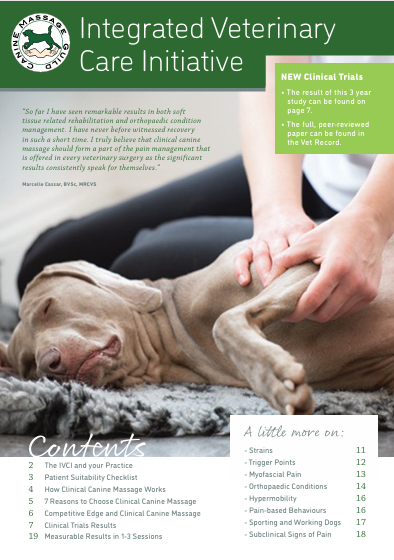
The Canine Massage Guild's Integrated Veterinary Care Initiative (IVCI) has been developed specifically for vet practices, with information about clinical canine massage, a consultation aid sheet and leaflets you can give to interested clients. There is also access to a dedicated online veterinary enquiry page and a register of actively practising therapists.
I have a small number of printed IVCI packs available on request - please contact me via the form below to request your copy.
As part of this initiative, I’m happy to visit your practice for a lunch 'n' learn - an informal chat over lunch about clinical canine massage and how it might fit alongside your existing care for patients - or to speak at a client presentation evening, if that's something your practice offers clients. Just get in touch and we can arrange something that works for you.
Integrated Veterinary Care Initiative